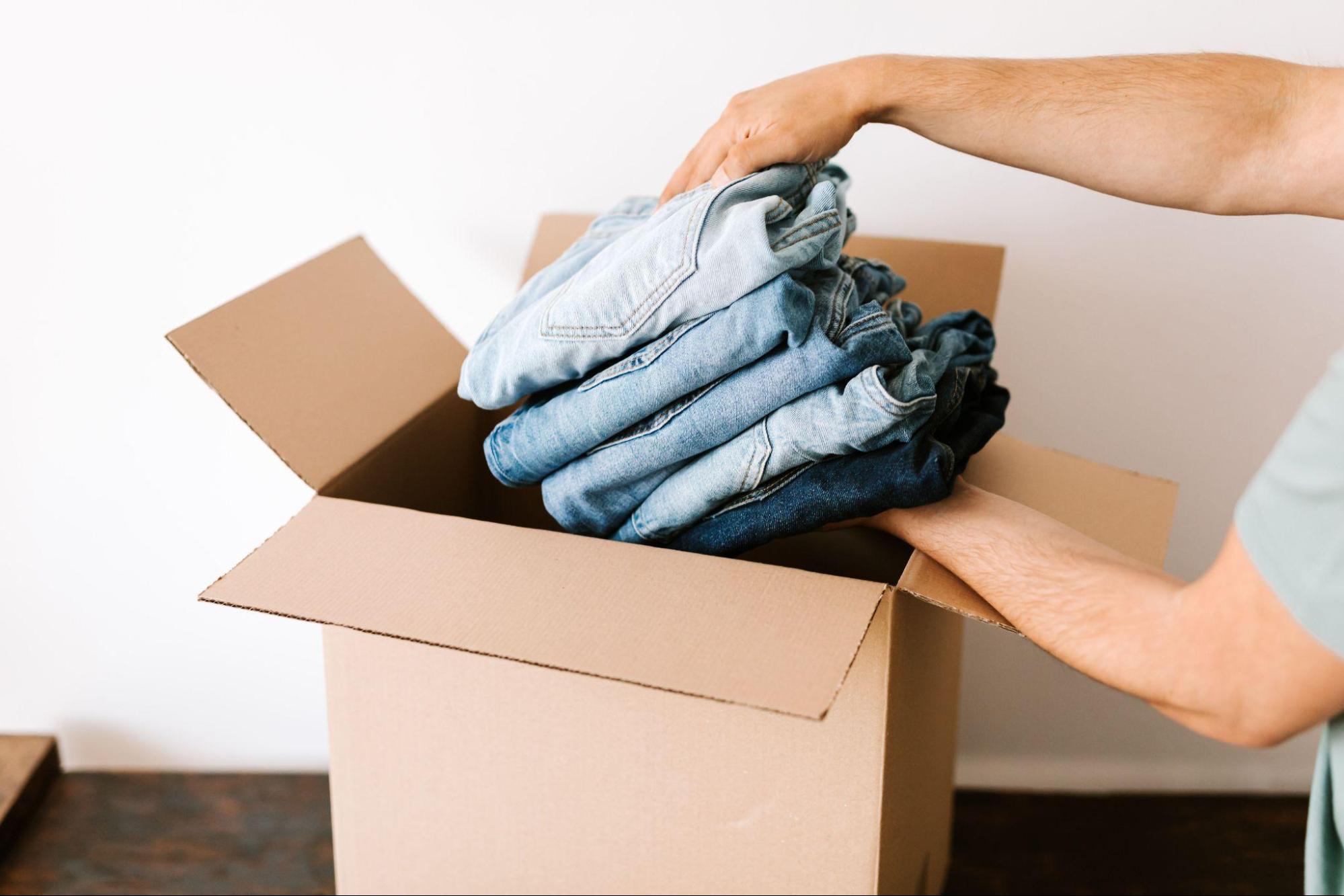
Clothes get packed badly because they seem low-risk. Nothing about a jumper suggests it needs careful handling, so it goes into whatever box has space left.
The damage that follows is rarely visible on arrival. Creases that set permanently, a coat that lost its shape because it was folded at the shoulder, mildew that appeared three weeks later on something packed slightly damp, and moth damage that started before the move and had eight weeks in a warm trailer to develop.
Most of it is avoidable with decisions made before anything goes into a carton.
Reduce Before Packing, Not After
Clothing is the easiest category in a household to cut, and the one people most reliably move in full.
Anything unworn for two years, anything that no longer fits and hasn’t for some time, and anything kept for a version of life that didn’t arrive all get paid for by weight across the entire distance. Long-distance moves are priced by shipment, which makes this the one purge with a directly measurable return.
Doing it before the survey, rather than after, matters, since the estimate is based on what the surveyor sees. Donation collections also need booking well ahead, and the window closes exactly when everything else gets busy.
Clean Everything Before It Is Packed
This step prevents the damage nobody connects to the move afterward.
Body oils, perspiration, and food residue are invisible on a garment that looks clean, and they are not inert. Over weeks in storage, they oxidize into stains that weren’t there when the item was packed, and they are much harder to remove once set.
They also attract the real problem: clothes moths. The larvae feed on keratin, meaning wool, cashmere, silk, and anything with feathers, and they are drawn to soiled areas in particular. A garment packed dirty into a dark box for two months is close to an ideal environment. Cedar and lavender deter rather than kill, so include them but don’t rely on them. If you suspect something is already affected, seal it in a bag and freeze it for several days to kill larvae before you close the box.
One detail that undoes all of this: remove the plastic film dry cleaners use. It traps residual moisture against fabric and can yellow fibers over time. Cotton or a breathable garment bag is what should be on the rail for transit.
Pack nothing even slightly damp. Mildew needs very little to start, and a sealed carton in a warm trailer supplies the rest.
The Containers That Do the Work
Wardrobe cartons are the single most useful item in this category. They are tall boxes with a hanging rail across the top, and garments transfer from a closet rail straight onto them without being folded.
For tailoring, coats, dresses, and anything structured, that difference is between arriving wearable and arriving needing attention. A suit jacket folded across the shoulder develops a crease along the seam line that pressing doesn’t fully resolve because the padding underneath has been compressed.
Specialty cartons cost more than standard ones and take up more space on a truck, so factor that in when you get a moving quote rather than discovering it at the end. For most households, you need only a few, since only structured and delicate pieces genuinely need them and everything else can be folded.
Hang Some Things, Fold Others
The rule is about weight and construction, not value.
Hang anything structured or woven that holds a shape. Suits, blazers, coats, dresses, and shirts all do better on a rail, and they travel best in wardrobe cartons rather than draped over the top of a box.
Fold anything knitted. Knitwear hung for any length of time stretches under its own weight, and the shoulders distort in a way that does not recover. Heavy jumpers are the worst offenders and the ones most often hung because they feel too good to fold.
Use acid-free tissue between the folds of anything delicate, embellished, or sentimental. Beading and sequins catch on each other and on neighboring fabric, so box a wedding dress or anything similar flat with tissue rather than hang it for a long journey.
What Not to Vacuum-Seal
Compression bags are excellent for bulk but actively harmful to certain materials, which isn’t obvious from the packaging.
They work well for cotton, synthetics, and bedding, where the volume savings are real and the fabric recovers. They work badly for down, since compressing the fill for weeks damages the loft that makes it warm, and the recovery is never complete. They work badly for wool and cashmere, which crush and crease under sustained pressure.
Never seal leather, suede, or fur in plastic. They need air circulation, and sealing traps moisture against a material that responds to it by developing mould or drying unevenly.
Shoes, Bags and Leather
These items are often thrown in loose, and they are among the easiest to deform.
Shoes hold their shape if stuffed with paper or socks, and they should be wrapped individually so buckles and heels don’t mark the pair next to them. Boots benefit from something rigid inside the shaft. Shoes are heavier than people estimate, so they belong in small cartons rather than large ones.
Handbags get stuffed and wrapped for the same reason, with hardware protected so it does not scratch the leather beside it. Anything leather is worth conditioning before a long trip, since the transit environment is drying and the treatment takes minutes.
Jewelry and watches do not go on the truck. They travel in the car, along with anything else small, valuable, and irreplaceable.
The Trailer Is Hotter Than People Expect
A container crossing the country in summer can reach temperatures well above the air outside and hold them for days at a time.
Shoe adhesives soften and can fail. Leather dries. Delicate synthetics and anything with applied decoration are vulnerable. If a wardrobe includes genuinely valuable pieces, it’s reasonable to ask whether climate-controlled transport is available, especially if the shipment will spend time in storage between pickup and delivery.
The same applies to humidity. Anything traveling through or stored in a humid region should have moisture absorbers in the cartons, and nothing should be sealed airtight for a long period unless it tolerates it.
Pack a Bag That Travels With You
Delivery windows on long-distance moves run in days rather than hours, and clothing is the category people underestimate most when packing for the gap.
Pack two weeks of practical clothing, anything needed for work, something appropriate for the destination’s weather (which may differ from the origin), and whatever you need for an occasion falling in that window. It goes in the car, not the truck.
At the other end, hang or unfold the structured pieces on the first day rather than leaving them boxed while you sort other rooms. Creases set with time and pressure, and most release on their own within a day if you hang the garment promptly. A steamer resolves the rest in considerably less time than an iron.
The Damage Happens Before the Truck Arrives
Almost everything that goes wrong with clothing in a move is decided during packing, not during transport.
Clean before packing, dry completely, fold knits and hang structured pieces, keep leather and down out of compression bags, use small boxes for shoes, and carry valuables and the first two weeks yourself.
None of it takes specialist skill. It takes deciding these things while packing, not discovering them while unpacking.