Ten minutes before a premiere, the room where a stylist works looks nothing like the photographs that follow. Garment bags hang on every door, a steamer hisses in the corner, and a folding table disappears under velvet trays. The gown was settled weeks ago. What gets decided in those last minutes is much smaller, and it matters more than most people assume.
Stylists describe this stage as balancing rather than adding. A gown arrives with its own opinions: a neckline that demands attention, a bead pattern that already throws light, a color that pulls warmth out of skin or puts it back. The accessory either argues with all of that or quietly settles it.
The thread running through most great carpet moments is restraint applied in exactly the right place. Hard sparkle reads as loud on camera, and loud is difficult to control under a hundred flashes. Soft light reads as expensive. That distinction, far more than budget, separates a gown that photographs beautifully from one that merely photographs.
The Gown Sets the Terms
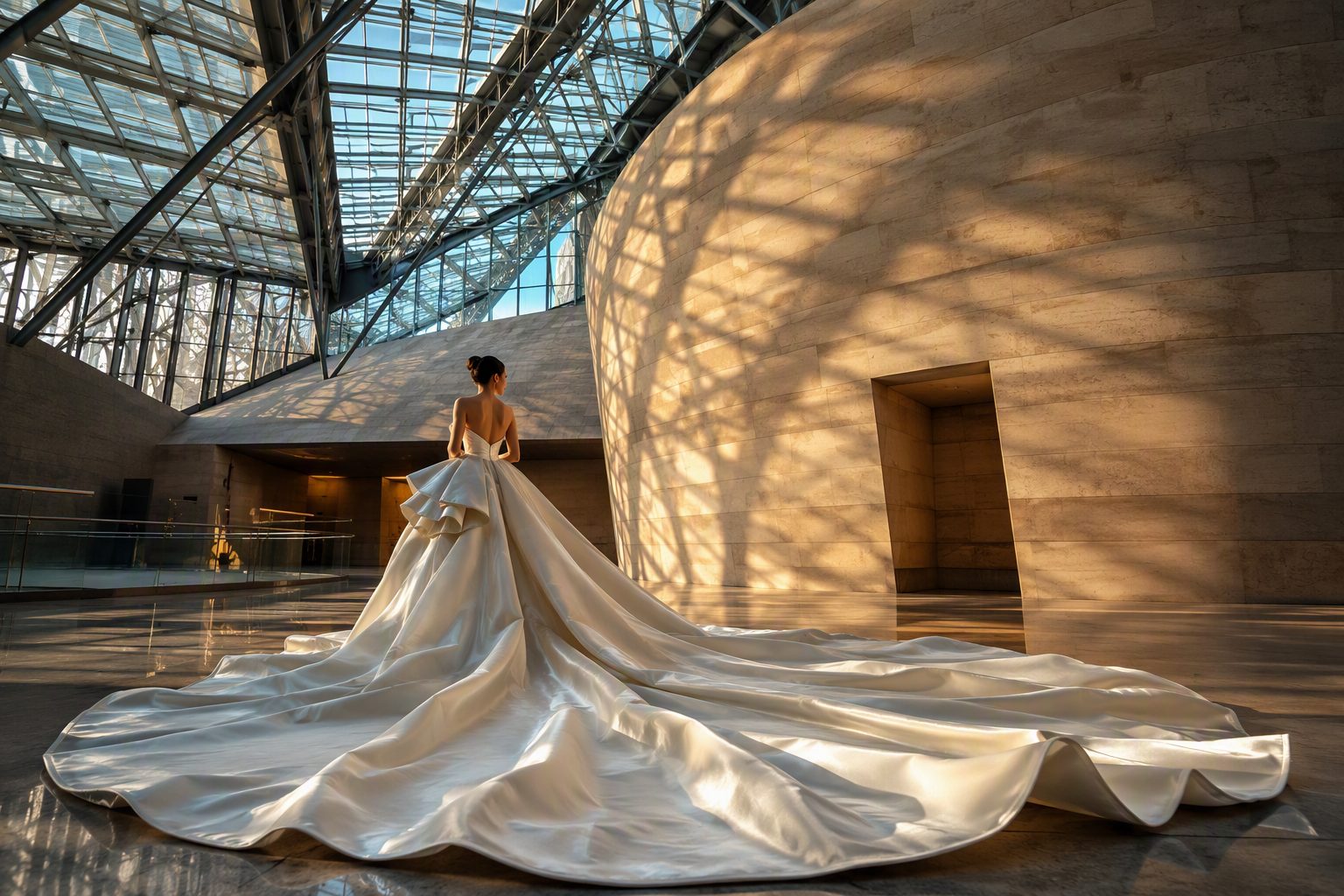
Every styling decision starts with an honest read of the dress. A heavily embellished bodice is already doing the work of a statement necklace, so adding one creates competition rather than richness. A deep column neckline leaves a long stretch of skin that can carry a pendant comfortably, while a high collar or a dramatic shoulder closes that space and pushes the decision upward toward the ears.
Stylists map this out physically, laying jewelry beside the gown on a flat surface under bright light before anything is tried on. Textures behave strangely together. Matte silk absorbs light, sequins scatter it, and velvet swallows it almost completely. A piece that looks perfect against a plain backdrop can vanish against the wrong fabric or, worse, start to look cheap beside it.
Soft Light Reads Better Than Hard Sparkle
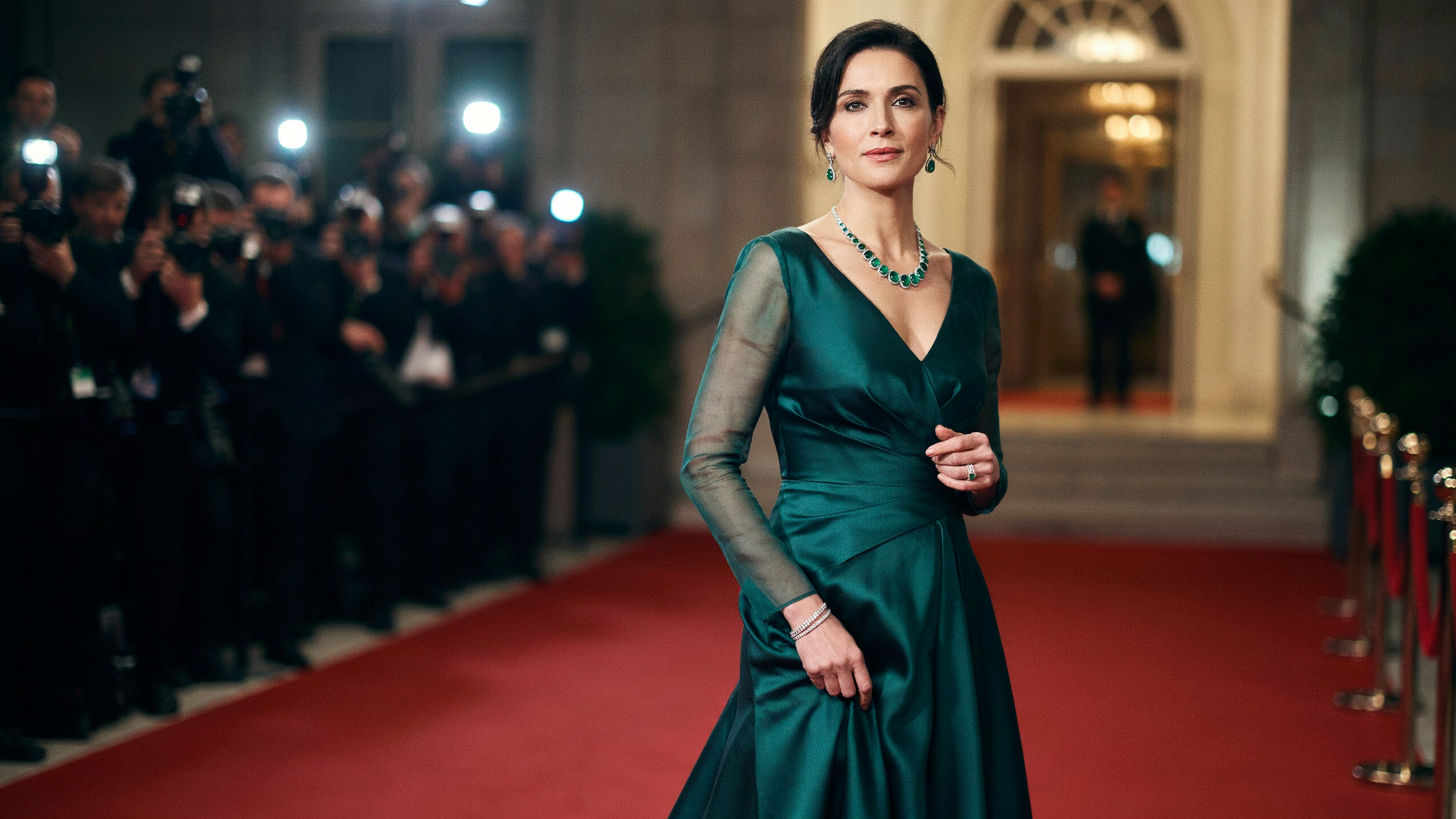
Photographers on a step and repeat line fire constantly, and the light they work with is unforgiving. Faceted stones answer that light with sharp, high-contrast flashes, which is thrilling in person and chaotic in a still frame. Anything with a softer optical surface behaves differently, spreading light across the skin instead of bouncing it back in points.
That is the technical reason pearls keep reappearing on carpets that otherwise chase novelty every season. Their surface is built from layered nacre, and that layering produces a diffuse glow rather than a glint. The Gemological Institute of America ranks luster as arguably the most important of the seven pearl value factors, reserving its top grade for reflections that stay bright and sharp. A camera flatters exactly that.
Framing the Face Without Crowding It
Evening wear tends to be elaborate below the collarbone, which leaves the face as the one area that usually needs help rather than decoration. Earrings sit in the most useful position on the body for that job, catching light at roughly the height of the cheekbone and throwing a little of it upward.
A well-chosen pair of real pearl earrings does that work without entering into a negotiation with the gown, which is why stylists reach for them when a dress is already ornate. Scale is where judgment comes in: a drop long enough to move when the head turns adds life to a static pose, while anything reaching the shoulder competes with the neckline it was meant to complement.
Quality That Survives the Close-Up
Carpet photography is merciless about detail. Modern lenses resolve far more than the eye does at conversational distance, so a thin, chalky surface that passes in a dim room becomes obvious in a cropped portrait. Nacre thickness is the variable underneath all of it, and the same reasoning that guides stylists toward heirloom-grade material sits behind choosing jewelry that outlasts seasonal trends, where what a piece is made of counts for more than whichever silhouette happens to be current.
Matching is the other detail that separates professional results from approximate ones. In anything built from more than one pearl, the individual pearls need to agree with each other on color, shape, and surface, because a mismatched pair sends the eye straight to the discrepancy rather than to the person wearing it.
Building a Personal Version of the Rule
None of this belongs exclusively to people with a publicist. The principle scales down to a wedding, a gala, or a company dinner without losing any force, because the physics of light and the proportions of a face do not change with the guest list.
History supports the approach. The V&A’s survey of jewellery across the centuries traces pearls through European pieces from the medieval period onward, prized for their symbolism and for the quiet quality of their surface long before cutting techniques taught stones to glitter. A material with that kind of staying power is not something stylists rediscovered last season.
The practical version of the rule is short. Let the most elaborate element of the outfit lead, put the softest light nearest the face, and spend the budget on material rather than size.
Watching this happen in real time is less glamorous than it sounds. There is a great deal of holding pieces up to a mirror, walking a few steps, and putting them back in the tray. The stylists who do it well are not working from a list of rules so much as from a habit of subtraction, removing whatever competes until only the pieces that cooperate remain.
So the takeaway for anyone dressing for a serious evening is to stop asking what else the outfit could carry and start noticing what it already carries. Then choose the one accessory that lights the face and let everything else stay exactly where it is. That is the whole secret, and it has been sitting in plain view on every carpet for decades.