Style has been an experiment in the Southern California waters for decades, and looks have been proliferating across the nation. There was never a separate dress code here, just beaches that simply ran out into the street and stayed there. In this article, we’ll examine how surfing and skating became the average American’s everyday attire and why Santa Monica is still leading the way with this trend.
The Evolution of Coastal Aesthetics into Everyday Casual Fashion
In the early days, beachwear had to perform practical functions: dry rapidly, be comfortable to wear, and resist salty water and sand. This reasoning extended offshore into the mid-seventies, when it was found more comfortable to wear non-formal clothing. A T-shirt, shorts, and flat-soled sneakers evolved into an urban ensemble, which needed no explanation. The requirements were decided by the ocean, and the wardrobe was just the catch.
Vans is a case study. The Van Doren Rubber Company was founded in Anaheim on March 16, 1966, and produced shoes on location — and the rubber sole had a surprisingly good grip on skates in Southern California. Meanwhile, there was no real strategy to it; these shoes just performed better than others. The first ones were even made on order: the customer would order a color in the morning and get their pair the same day!
The saga of Stüssy was similar. In 1980, board shaper Shawn Stussy of Laguna Beach began marking his boards with a marker, and later he began to apply his signature to T-shirts as a way to advertise his core business. The outfits soon started to outgrow the boards, and the sweeping autograph evolved into one of the most familiar logos in the business. So, the coast provided the industry with not only a cut but also “clothes thinking.”
Key Elements Defining West Coast Surf and Skate Influences
The West Coast has left a set of very specific solutions in the wardrobe of everyday life. In 1975, the skate scene of the Dogtown neighborhood, on the border of Santa Monica and Venice, entered the Del Mar Nationals wearing blue Zephyr T-shirts and blue Vans, and half of the finalists of the tournament ended up on that team. A year later, Tony Alva and Stacy Peralta brought the Vans #95 model (now the Era) to mass production.
Several elements remained constant from this environment to the mass market:
- A sole that is flat and has been vulcanized for board grip;
- Shoulders and hips not too tight, free to move;
- Graphics from graffiti, punk and surf shop signs;
- Worn in cotton shades that become darker with age.
None of these are anything that designers could have dreamed up at a desk. They were born from a set of conditions; they survived asphalt, sun, and constant movement. That is why they’ve survived dozens of fashion waves. Put another way, the lifespan of such goods is the result of where they are from, not advertising money.
Iconic Local Brands and Santa Monica Fashion Retail Influence
Santa Monica combines the beach, the pedestrian Third Street Promenade, and a dense retail district where brands test ideas on a live audience. Brandy Melville, founded in Italy by the Marsan family and opening its first American store in 2009 in Los Angeles’s Westwood, quite quickly became part of this exact California context. The local labor market lives to the same rhythm, and the website Jooble gathers Brandy Melville jobs alongside other Santa Monica retail openings into a single feed.
The storefront here is directly linked to hiring: the sales associate, stylist, and merchandiser shape how a piece looks on a person rather than on a hanger. Fresh listings around the district offer a solid snapshot of the local market.
| Employer | Sample role | Listed pay | Schedule type |
| Lululemon | Executive assistant II | $69.1k – $90.7k | Hybrid, permanent |
| Uniqlo | Retail sales associate | $17.50 per hour | Full-time and part-time |
| Adidas | Seasonal store associate | $17.87 – $23.82 per hour | Seasonal, flexible hours |
| Free People | Stylist | $18.47 per hour | Flexible hours, night shift |
| Crossroads Trading | Security associate | $19 – $23 per hour | Hourly, shift work |
The numbers show that fashion in this district rests not only on designers and buyers. The store works as an arena where style is tested daily, and while front-line salaries look modest, it is these employees who translate the trend from the runway to the actual sidewalk.
Seasonality adds its own calendar to the district: in summer, store staff expands to accommodate the tourist flow, shrinking back by autumn. This pulse largely explains why a noticeable portion of coastal job openings are initially structured as temporary or part-time employment.
How Modern Youth Culture Continues to Drive Casual Streetwear Styles
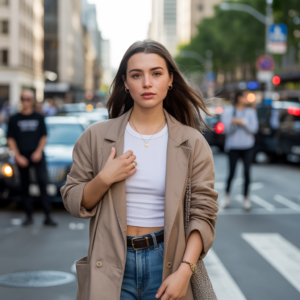
Today, it has picked up significantly: a video taken on the boardwalk doesn’t even get to the warehouse, let alone the feed. A young audience puts together a look from all the above — a vintage shop, a resale, and an athletic brand — and doesn’t see it as an eclectic or rebellious outfit. The choices in the street style department of our magazine demonstrate the blurring of the street fashion categories.
This is the same for anyone looking for a job. The Jooble hiring platform works in 66 countries and introduces approximately 300,000 new jobs on a daily basis, removing the burden on applicants to receive fresh updates through e-mail, smart tags for job conditions, recommendations for relevant jobs, a free resume builder, and salary information. Candidates can attend the service free of cost and can apply for the vacancies from anywhere in the city using the application available on mobile.
This is by no means a niche website, as approximately 90 million candidates log in each month. This is particularly important for the fashion industry: seasonal spikes, adaptable changes, and frequent workforce turnover call for a quick recruiting path.
Where the Coastline Points Next
California beach culture did not become a museum exhibit; it merely faded out of the spotlight to become the norm in the wardrobe. Its primary exports are comfort, simplicity, and clothes that are not calling themselves something else. Whether they like it or not, every person who wears a T-shirt and flat-soled sneakers is wearing a piece of Santa Monica.