I've spent time researching what makes the Jude Bellingham haircut so popular right now, and honestly, it makes sense.
His look combines an afro high top, low taper fade, and a sharp hairline into one clean style. If you've been struggling to explain this style to your barber, you're not alone and this article is here to help.
I'll cover why this look is trending, how barbers shape and cut it, and how to maintain it at home. I've looked into the details so you don't have to.
By the end, you'll know exactly what to ask for and how to keep it looking fresh.
Overview of Jude Bellingham Haircut Trends

Men today want a look that feels bold but still clean, and Jude Bellingham gives them exactly that. His hair shows up on football pitches and red carpets alike, which is a rare crossover appeal.
Social media has done a lot of the heavy lifting too, with short clips going viral and pushing men to search for the same look at their local barbershop.
His style is built on four key things: natural afro texture for fullness, high top volume for structure, a low taper fade for a clean finish, and a defined hairline that frames the face. Miss one, and the whole look changes.
Afro High Top Structure Explained

The high top afro is more than volume. It takes skill, the right hair type, and a steady hand.
What Makes the High Top Afro Stand Out
The high top sits flat on top and round at the sides. It creates a structured silhouette that looks intentional. This isn't just letting hair grow out.
The shape is carved and maintained regularly. That flat crown is the star of the whole cut.
Best Hair Types for This Style
This cut works best on
- Type 3c to 4c curl patterns
- Hair with enough density to hold shape
- Hair that responds well to moisture
If your hair is very fine or straight, this style will be hard to maintain without a lot of product work. Curly and coily hair naturally gives the volume needed.
How Barbers Shape the Top for Balance and Volume
Barbers use a pick comb to lift the hair fully before cutting. They work around the head in sections, keeping the top level. The key is cutting dry after the hair is fully shaped.
Cutting wet can throw off the final height and make the top uneven.
Low Taper Fade for Clean Modern Look

The taper does the quiet work in this style, keeping everything tight without pulling focus.
Difference Between Low Taper and Skin Fade
A low taper starts dropping around the ear and above the neckline. It blends from the natural hair length down to shorter hair without hitting the skin.
A skin fade, on the other hand, goes all the way to bare skin. The low taper is subtler and works well with the bigger top.
Why the Taper Improves Facial Structure
A clean taper pulls the eye upward. It makes the jawline look sharper and the face more structured.
Men with rounder faces often look more defined with a taper simply because it creates visual contrast. The sides stay minimal so the top takes center stage.
Maintenance Frequency for a Sharp Fade
To keep it looking clean, most barbers suggest a touch-up every two to three weeks. After three weeks, the taper starts to grow out and loses its shape.
Consistent visits are part of owning this style.
Precise Hairline and Edge-Up Details
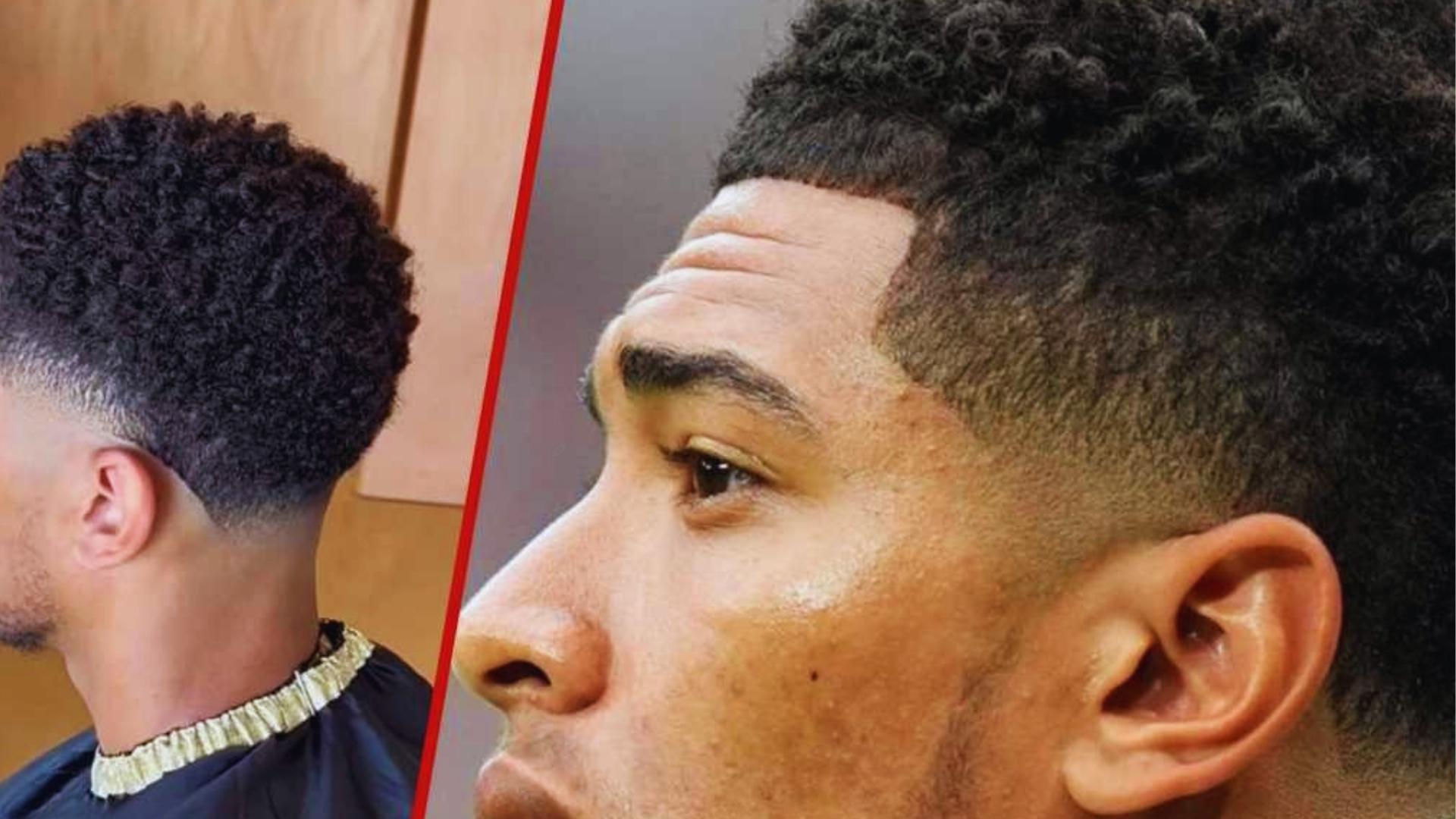
A sharp hairline can make or break the whole cut. Clean edges change everything.
Importance of a Clean Hairline in Modern Cuts
The hairline frames the face. When it's sharp, the whole cut looks intentional and fresh. When it's uneven or grown out, even the best fade starts to look off.
Men who get this cut usually consider the edge-up as important as the fade itself.
How Barbers Create Sharp Outlines
Barbers start with a T-outliner to define the shape. They trace the natural hairline first, then square off the corners slightly to give a structured look.
Some barbers pencil a guideline before cutting to keep both sides balanced.
Tools Used for Detailing and Finishing
A sharp cut comes down to the right tools in the right hands.
- T-outliner: for sharp, close edges
- Straight razor: for cleaning up the neck and temples
- Detail brush: to remove clippings before inspection
Good finishing tools make a real difference in how clean the final result looks.
How Curls Are Defined Using Sponge Method

The sponge method is one of the easiest ways to bring out curl definition at home.
360-Degree Sponge Technique Explained
A hair sponge has small holes or loops that grab the hair and twist it into coils as you rub. Use circular motions all around the head, not just on top.
Work in sections and repeat until the curls look even. Do this on slightly damp hair for best results.
Products That Improve Curl Definition
The right products make a real difference in how your curls look and last through the day.
- Curl cream: adds moisture and shape
- Lightweight gel: holds curls without stiffness
- Leave-in conditioner: keeps hair soft before sponging
Avoid heavy products that weigh the curl down. You want definition without losing the volume.
How to Avoid Frizz and Dryness
Apply product to damp hair, not soaking wet. Seal with a light oil like jojoba or argan after styling. Avoid touching the hair while it dries. The more you handle it, the more frizz you get.
Maintenance Tips for Modern Men
Good habits between barbershop visits keep this style looking sharp for longer.
- Wash two to three times a week with a sulfate-free shampoo and co-wash on off days to keep curls soft without stripping natural oils.
- Always follow up with a conditioner and rinse with cool water to seal the cuticle and lock in moisture.
- Use the LOC method every two to three days: leave-in conditioner, oil like jojoba or castor, then a cream to seal it all in.
- Sleep with a durag or silk pillowcase to protect your curls from frizz and keep the shape intact overnight.
- Avoid picking the hair too often, skip heat tools without a protectant, and stay away from rubber bands directly on the hair.
- Deep condition every one to two weeks to prevent dryness and keep your curls strong and healthy.
Conclusion
If you've been thinking about trying the Jude Bellingham haircut, I'd say go for it. I've seen this look work on so many different face shapes, and the key is finding a barber who understands the structure.
Walk in with a photo, talk through the fade level, and trust the process. It takes a little upkeep, but the result is worth it.
Drop a comment below if you tried this cut or have questions. I'd love to hear how it went for you.
Frequently Asked Questions
How often should I get a Jude Bellingham haircut touched up?
Every two to three weeks is ideal. The fade and edges grow out quickly, so regular visits keep the style looking sharp.
Can I get this style with a low hair density?
It can be tricky. Thinner hair won't hold the high top shape as well. Talk to your barber about the best version of this cut for your hair.
What products work best for maintaining this hairstyle at home?
A good leave-in conditioner, lightweight curl cream, and a hair sponge are the basics. Add a light oil to seal in moisture after styling.
Is the low taper fade suitable for all face shapes?
Yes, mostly. The low taper works especially well for oval, square, and oblong face shapes. It draws attention upward and adds height.
How do I keep my hairline sharp between barber visits?
Use a T-outliner carefully along the edges. If you're not confident with clippers, it's better to wait for your barber than risk an uneven line.