Everyone says it is just good styling. Better lighting. A different haircut. But hair does not grow back on its own once it starts receding.
And MGK's temples were clearly thinning in his early career photos. So what changed?
That question kept pulling me in until I actually looked into it. I went through years of photos, read what hair transplant surgeons had to say, and looked at every possible explanation.
In this article, you will get a clear look at how his hairline changed over the years, what experts think happened, and what the real options are for someone dealing with the same kind of hair loss.
Here is everything I found.
Who Is Machine Gun Kelly?

Machine Gun Kelly, born Colson Baker, is an American rapper, singer, and actor from Houston, Texas.
He gained fame in the early 2010s with his debut album Lace Up in 2012 and later crossed into mainstream music with pop-punk albums like "Tickets to My Downfall."
He has also acted in films and TV shows. Known for his bold fashion choices and heavily tattooed look, MGK is one of the most talked-about celebrities of his generation.
His constantly changing appearance, including his hair, has kept fans and media outlets watching closely for years. He is now a well-known name in both music and pop culture.
Machine Gun Kelly Hair Before and After
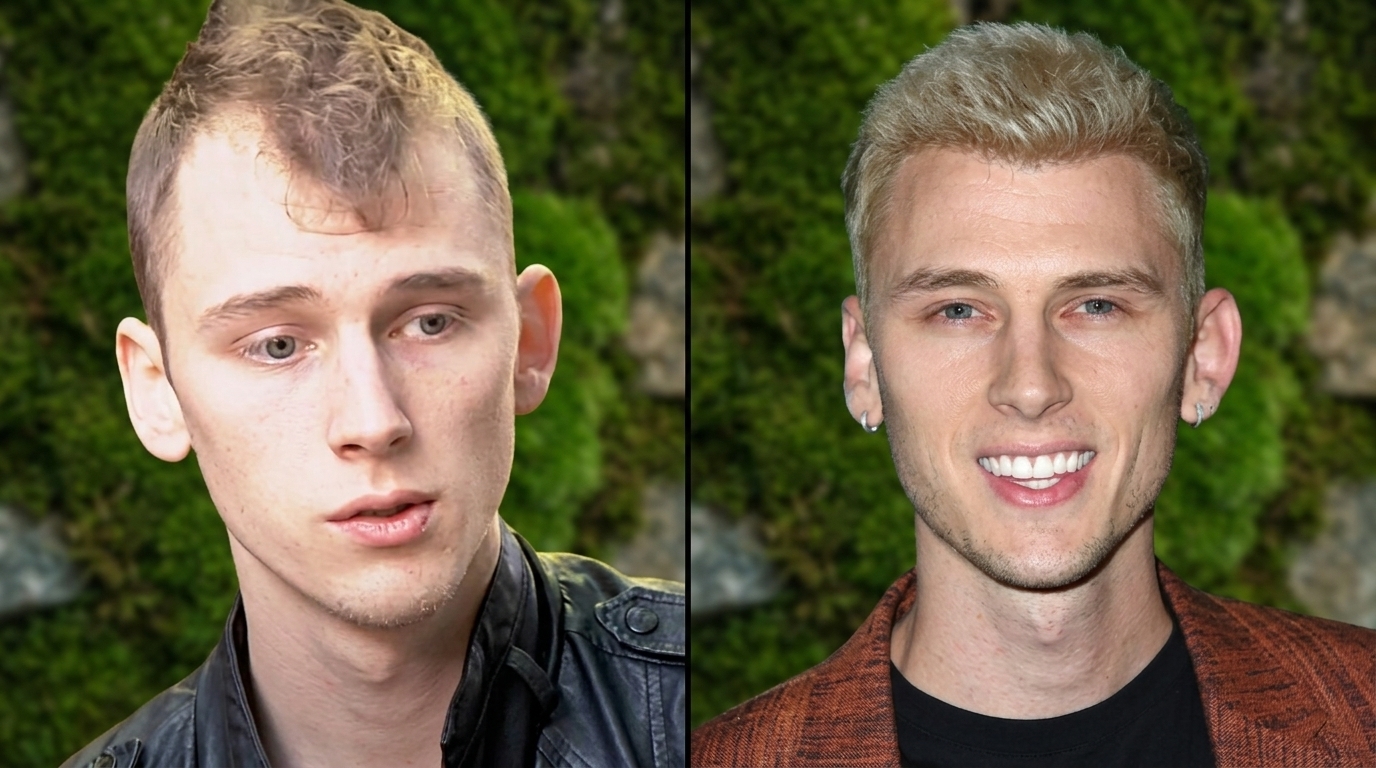
A side-by-side look at how his hairline has shifted over the past decade tells a very clear story.
Early Signs of Hair Loss
In his early career, MGK's hairline showed visible recession at the temples. Photos from around 2012 to 2016 show a slightly uneven hairline with noticeable thinning near the front.
Hair specialists describe this pattern as androgenetic alopecia, which is the medical term for male pattern baldness. It tends to show up in the twenties and often starts at the temples first.
The density looked lower compared to later years. These early signs are what first led people to ask questions about what changed and why his hair looked so different later on.
Comparing MGK's Hairline Over the Years
Recent photos of MGK show a fuller, denser hairline compared to earlier years. The temple areas look more filled in. The overall shape appears more defined and structured.
Hair loss specialists have used the Norwood Scale to describe his earlier stage, placing him around a Norwood 2A with a soft M-shaped hairline. That level of recession does not fix itself.
These visible changes are hard to explain through natural hair growth alone. That gap between his earlier and current hairline is exactly what sparked widespread speculation about a possible hair transplant procedure.
Did Machine Gun Kelly Get a Hair Transplant?
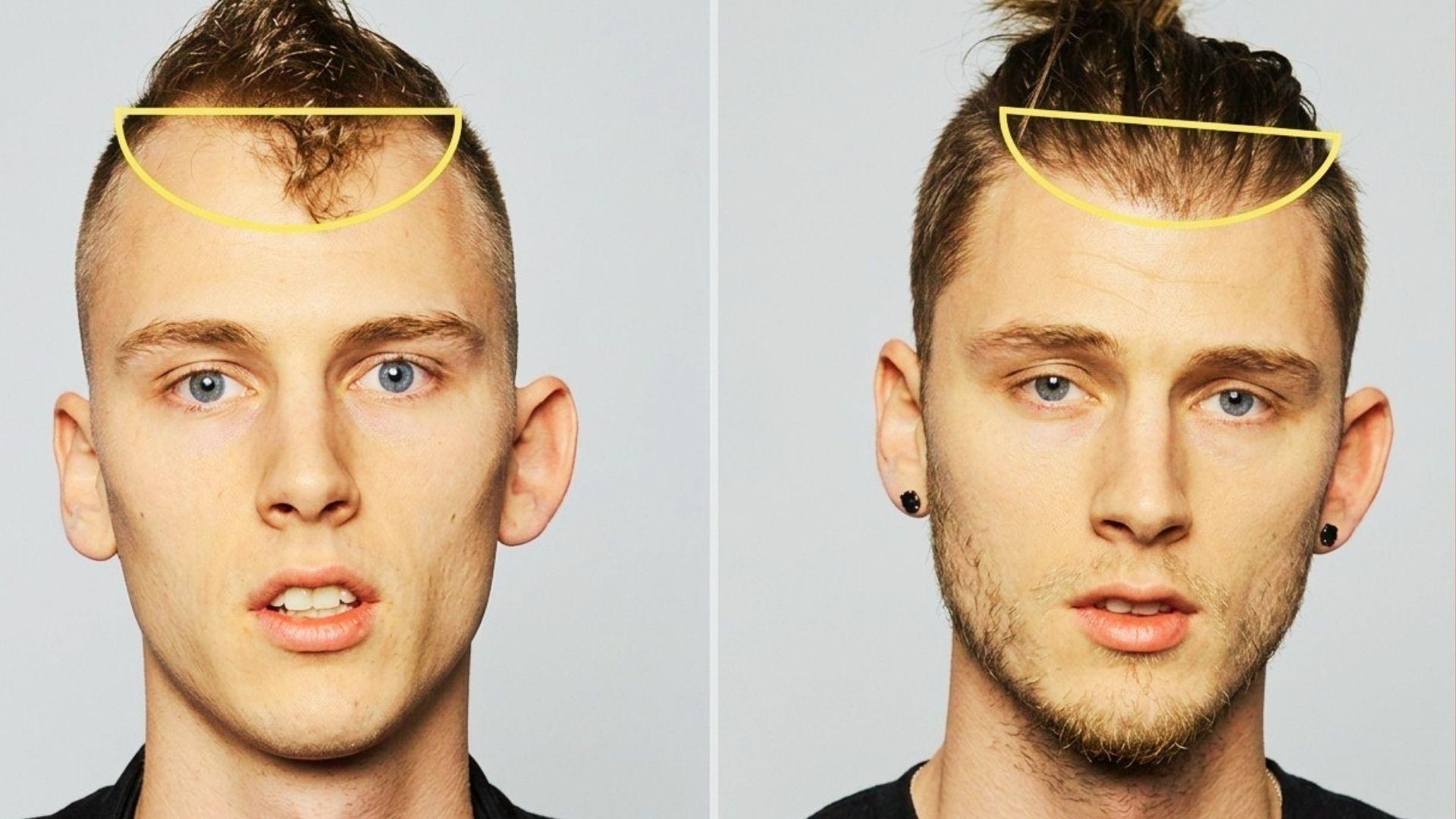
MGK has never publicly confirmed a hair transplant. But the visual changes in his hair over the years are hard to ignore.
His hairline looks notably different now compared to his early career photos. The temples appear fuller. The density has increased. Hair loss does not reverse on its own.
That basic fact is why many people, including hair specialists, believe he may have had a procedure done. No official statement has been made, so nothing is confirmed.
Still, the photographic evidence is strong enough that the question keeps coming up in conversations across forums, comment sections, and media outlets.
Surgeon Opinions on MGK's Hair Transformation
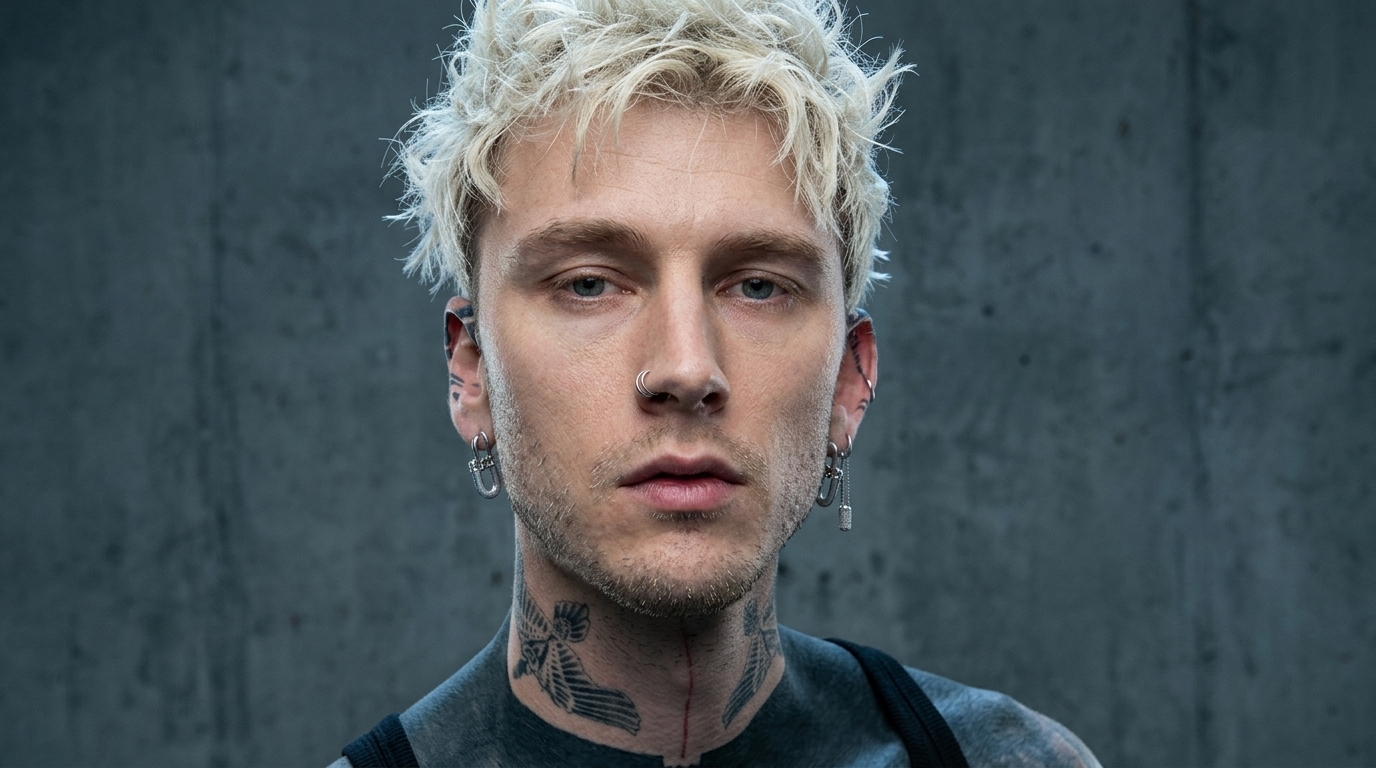
Several hair transplant specialists have commented on MGK's hairline based on public photos. Many point to the temple area restoration as a key sign.
The hairline design looks natural, which is something surgeons often note as a marker of skilled work. The density increase is also consistent with what a well-performed procedure can achieve.
Surgeons have also discussed the donor area at the back of the scalp, though it is difficult to assess properly through photos alone.Some analysts have pointed to a possible scar at the back of his head as a clue about which method was used.
Most experts agree that diagnosing any cosmetic procedure from photographs has real limits. Without direct examination or medical records, no one can say with full certainty what procedure, if any, was performed.
What Could Explain MGK's Hair Transformation?
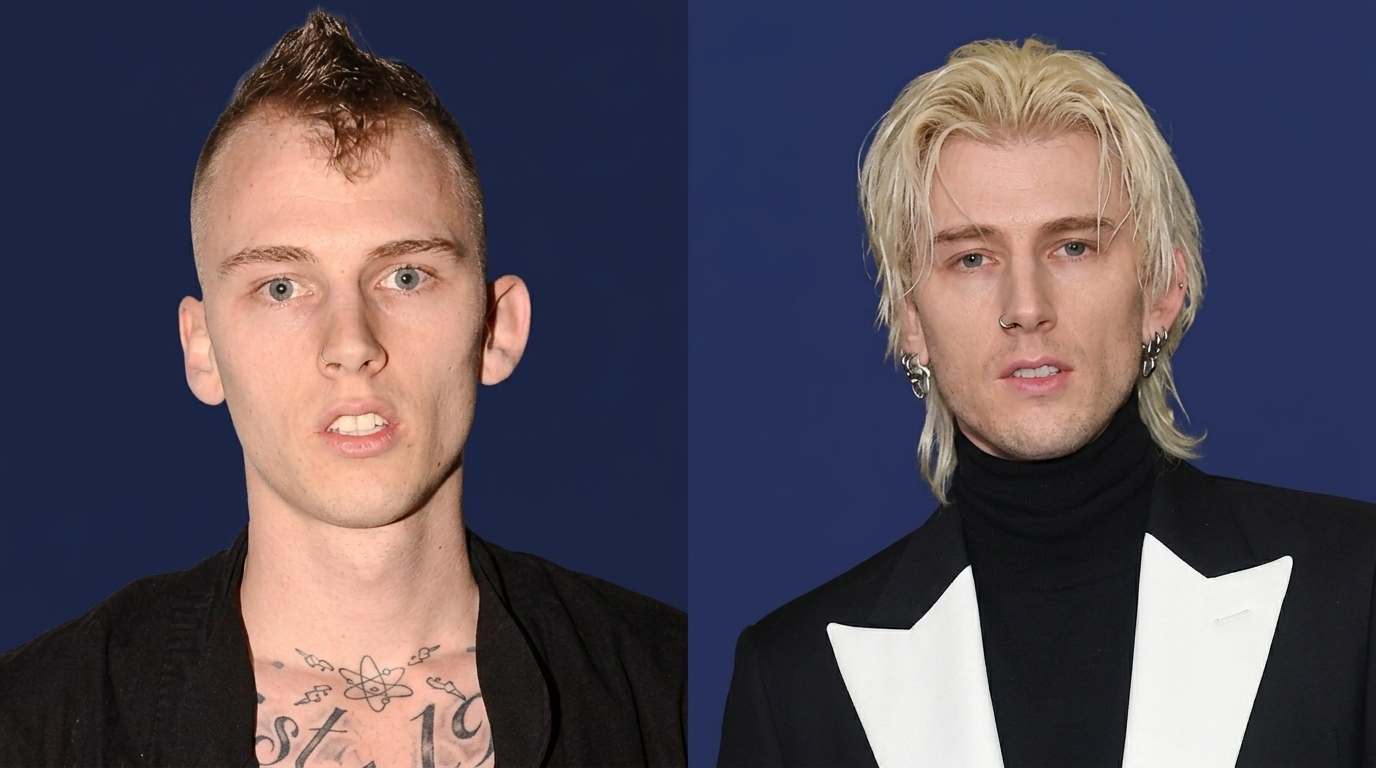
There are a few real explanations worth looking at before drawing any conclusions.
Hair Transplant Theory
FUE and FUT are the two procedures most commonly mentioned by hair specialists when discussing MGK. FUE involves removing individual hair follicles from the donor area and placing them into thinning spots.
It leaves minimal scarring. FUT, the older strip method, removes a section of scalp from the back of the head and can leave a linear scar. Both can restore temple areas and add density.
Some online discussions have pointed to a possible machine gun kelly hair transplant scar visible at the back of his head, which would be more consistent with FUT. Because MGK has not spoken about this publicly, experts cannot identify the exact method used.
The procedure, if it happened, cannot be confirmed through photos alone. That uncertainty keeps the conversation going.
Other Possible Explanations
Not every hair change comes from surgery. MGK could be using hair fibers, which add the look of volume instantly. Medications like minoxidil or finasteride can slow loss and improve density over time.
PRP therapy, which involves injecting growth factors from the patient's own blood into the scalp, is another option many celebrities use quietly. More advanced clinics now offer exosome treatment, a newer approach using regenerative cells to stimulate hair growth at the follicle level.
Scalp micropigmentation is also worth knowing about. It does not regrow hair, but it creates the look of a fuller, denser hairline without surgery.
Skilled styling and better lighting can also change how a hairline appears on camera. These options are all worth considering alongside transplant speculation.
How MGK Compares to Other Celebrity Hair Transplant Cases

MGK is not the first celebrity to face hair transplant speculation. Stars like Elon Musk, Wayne Rooney, and John Travolta have all been discussed in the same context.
What makes MGK's case different is the combination of his young age, his very public image, and the sharp contrast between his old and new hair photos.
Most celebrity cases share a similar pattern: visible thinning early on, followed by a noticeably fuller look later. The difference with MGK is how openly his fans have tracked those changes online.
His case has become one of the more talked-about examples in recent years, especially because the visual shift happened relatively early in his career.
My Honest Take on This
I spent more time than I would like to admit looking at side-by-side photos of MGK's hair.
And here is what I noticed:
- The temples changed. A lot.
- The density went up noticeably.
- The hairline shape looks more structured now.
None of that happens on its own. Now, I am not a doctor. I cannot confirm anything. But I have read enough about hair loss to know that natural regrowth does not look like that. Androgenetic alopecia does not reverse without some kind of help.
If you have been dealing with thinning hair yourself, I get it. It matters. And seeing someone like MGK with great hair makes you wonder what options exist.
FUE, FUT, PRP, or even something newer like exosome therapy. There are more paths forward than most people realize.You deserve real answers. No guesses.
Conclusion
Honestly, looking at all of this made me think about how much we judge people's looks without knowing the full story.
MGK's hair may or may not have had help. The signs point in a certain direction. But only he knows for sure.
What I do know is this: If it is a machine gun kelly hair transplant or smart styling, the results speak for themselves.
If you found this helpful, leave a comment below. Share it with someone who has been asking the same question. And check out our other posts on celebrity hair topics.
Frequently Asked Questions
How old was MGK when he started losing his hair?
Machine Gun Kelly began showing visible signs of hair loss around age 22, which is when early photos from his 2012 debut era reveal temple recession.
How long does it take to see results after a hair transplant like MGK's?
Most patients see noticeable growth starting at 3 to 6 months, with full results visible after 12 to 18 months.
Does a hair transplant look natural on someone with MGK's hair type?
Yes, because FUE transplants use your own follicles from the donor area, the regrown hair matches your natural texture, color, and growth pattern exactly.
Can hair loss come back after a transplant?
Transplanted hair from the donor area is genetically resistant to balding and stays permanent, but native hair around it can still thin over time without medication.